Sunday, July 28, 2019

The Second Principle
What are Essential Questions?

Leslie Owen Wilson

Owen Wilson, Leslie. “What Are Essential Questions?” The Second Principle, 2014, thesecondprinciple.com/teaching-essentials/essential-questions/.

Date: 07/28/19

List of primary claims made in this reading:

Essential Questions – A key part of the instructional design process 

Essential questions are probing questions that set the tone for students-led probing, self-discovery, and provide deeper understanding to our world, and encourage the development of personal agency. 

Key Quotes:

Comprehensive, well-crafted questions ground intellectual pursuits giving students some sense of direction, purpose, and relevance as they are engaged in the work of the subject.

As students problem solve, read, inquire, sift and sort related knowledge and skills, essential questions become end points, beacons to final destinations, and landmarks marking the way.

In essence it is noted that “a good essential question is the principal component of designing inquiry-based learning. It is” essential questions that encourage collaboration among students, teachers, and the community and integrate technology to support the learning process. (sic)”  (Source: http://mc2.nmsu.edu/mathnm/exploration1/unit/content_questions.html)

They have emotive force with an intellectual bite, and readily invite the exploration of ideas.

They are meant to be wrestled with, chewed on, pondered over, read and talked about, as answers to these types of questions frequently have no right or wrong answers. Often, these are questions that have either moral or ethical foundations the students will have to take a stand on and defend as they engage in constructing individual meaning.

Questions of the reading?

What is an appropriate time frame for the introduction and "completion" of an essential question?

Further reading.

Wiggins, G. and McTighe, J. (2013) Essential questions: Opening doors to student understandingAlexandria, VA: ASCD (Association of Supervision and Curriculum Development).

McTighe, J. (2017) Designing and Using Essential Questions (Quick Reference Guide) Pamphlet. Alexandria, VA: ASCD (Association for Supervision and Curriculum Development).

(2011) The Essential Questions Handbook: Hundreds of Guiding Questions That Help You Plan and Teach Successful Lessons in the Content Areas Paperback. Scholastic Teacher’s Resources.


A Baker’s Dozen – 13 questions to help you determine if yours are Essential Questions

NoYes1.  Is the question meaningful and purposeful?
  2.  Is the question open-ended? Is it one that can be revisited, or has been revisited over time?
  3.  Does the question require support, rationale, or justification, not just an answer or response?
  4.  Does the question lead students to ask other questions? 
  5.  Does the question appeal to or trigger emotional responses?
  6.  Does the question encourage intellectual examination and responses?
  7.  Does the question center on a topic that is relevant to students? Is it a major issue, a problem, of particular interest or concern to their generation?
  8.  Does the question encourage discussion and/or collaboration?
  9.  Does the question ask the student to consider moral or ethical issues?
  10. Does the question encourage discourse, discussion, or debate?
  11. Does the question ask the learner to make a decision(s), create a plan of action, or come to a conclusion after examining related facts and issues?
  12. Does the question encourage higher levels of cognitive processing – analysis, inference, evaluation, predicting, synthesis or creation. 
  13. Does the question lead the learner to important, transferable, applicable ideas that may cross disciplines or subjects, or help unite varied disciplines?

Whole Book Approach : Episode 95: Reading Picture Books with Children – Interview with Megan Dowd Lambert

diyMFA

Gabriela Pereira

Pereira, G., & Dowd Lambert, M. (2018, January 11). Episode 95: Reading Picture Books - Megan Dowd Lambert Interview. Retrieved from https://diymfa.com/podcast/episode-95-reading-picture-books-megan-dowd-lambert. Podcast.

Date: 10/8/2012

List of primary claims made in this reading/listening:

  • The Whole Book Approach - reading with children, as opposed to reading to them, as it invites children to make meaning of text, art, and designIntegrating design elements into the publishing process
  • Teaching interaction between reader, text, and author
  • Being intentional to convey diversity on the page of your book

Key Quotes:

If kids can remember the name so of dinosaur species and their characteristics they are more than capable and are ready to learn why/how an author writes a book. - paraphrased, need to go back and listen again

List of facts/stats discussed in this reading:


Questions of the reading?


Tuesday, March 5, 2019

Facing Your Mid-Career Crisis : Should you cope or quit?

Harvard Business Review | Volume 97, Issue 2, Why Feedback Fails
Facing Your Mid-Career Crisis : Should you cope or quit?

Kieran Setiya

Setiya, Kieran. “Facing Your Mid-Career Crisis. Should You Cope or Quit?” Harvard Business Review, 2019, pp. 135–139.

Date: 03/05/18

Mid-Career Crisis is natural. Setiya identifies a few psychological reasons for mid-career crisis and strategies to find satisfaction in your current career - 


1. Regrets about the past - fixating on the idea that as we make decisions other possibilities are rejected and we our potential is limited. 


2. Making or feeling like failure, mistakes, or wrong turns. We should be looking at the big picture, not at individual projects/events. 


3. Pursue projects with existential value - the kind that make life worth living. Projects aim at completion, therefore the termination of a project marks the end of its existential worth. If we live in the present and look toward a bigger picture, we can eliminate the feeling of temporary satisfaction or dissatisfaction at the beginning and end of projects. 


4. Balance telic (aim at a terminal state) and antelic (without an end built in) activities. Example: the difference between putting your child to bed (telic) and parenting (antelic). Atelic activities are realized in the present. 

Key Quotes:

"The only way to avoid regret entirely is the care about just one thing, one metric to max out. But that would impoverish your life. Remind yourself that feeling you've missed out is the inevitable consequence of something good: the capacity to find worth in many walks of life."

Ameliortive Value - the value of solving a problem or answering a need, even when the need is one you'd rather not confront. Example: conflicts between colleagues, meet targets, putting out fires, etc.


Existential Value - the value of solving a problem or answering a need that makes life worth living, that make a meaningful impact. 

Questions of the reading?

Tuesday, February 26, 2019

Read Aloud Resources_For Further Review

Teacher Read-Aloud That Models Reading for Deep Understanding
http://www.readwritethink.org/professional-development/strategy-guides/teacher-read-aloud-that-30799.html

International Literacy Association 
https://www.literacyworldwide.org/

Revisiting Read-Alouds: Instructional Strategies that Encourage Students' Engagement with Text
By: Vanessa Morrison, Lisa Wheeler
http://www.readingrockets.org/article/revisiting-read-alouds-instructional-strategies-encourage-students-engagement-text

Effective Read-Aloud Strategies for Your Classroom
https://www.advancementcourses.com/blog/readaloud-strategies

In Defense of Read-Aloud: Sustaining Best Practice
Written by Steven Layne Foreword by Regie Routman
https://www.stenhouse.com/content/defense-read-aloud

Mechanics of Read Aloud

Mechanics of Read Aloud

Dr. Brian Sturm

Date: 02/03/2016


In this video, from the School of Information and Library Science at UNC-Chapel Hill, discusses some of the fundamentals of reading aloud picture books to young children.

Key Lessons:

Make sure listeners sit at a 90 degree angle so that everyone can see.

Eye contact with listeners is very important.

Books are intended to be read close by one/two people, for this reason EVERY book does not make a great read aloud book for small children. Be weary of small intricate illustrations and too much text.

Choosing a good read aloud book -
  • Simple illustrations
  • Bold outlines
https://www.youtube.com/watch?v=54mcQtP6i0k


Postmodern Principles: In Search of 21st Century Art Education

Art Education Journal | January 2004

Postmodern Principles: In Search of 21st Century Art Education


https://www.academia.edu/848181/Postmodern_Principles_In_Search_of_a_21st_Century_Art_Education


Olivia Gude


Gude, Olivia. “Postmodern Principles: In Search of a 21st Century Art Education.” Academia.edu - Share Research, www.academia.edu/848181/Postmodern_Principles_In_Search_of_a_21st_Century_Art_Education


Date: 02/26/2019


What do our students need to know to understand the art of many cultures, in the past and in the 21st century?


Olivia Gude's Addition to Principle of Design


Appropriation

For the students, recycling imagery felt comfortable and commonplace.

If one lives in a forest, wood will likely become one’s medium for creative play. If one grows up in a world filled with cheap, disposable images, these easily become the stuff out of which one makes one’s own creative expression.


Juxtaposition

Robert Rauschenberg revolutionized expressive painting when he substituted the seemingly random juxtaposition of found images for the personally generated abstract mark.

Recontextualization

The term juxtaposition is useful in helping students to discuss the familiar shocks of contemporary life in which images and objects from various realms and sensibilities come together in intentional clashes or in random happenings.

Often the meaning of the artwork is generated by positioning a familiar image in relationship to pictures, symbols, or texts with which it is not usually associated. 


Layering

As images become cheap and plentiful, they are no longer treated as precious and placed carefully side by side, but instead are often literally piled on top of each other.

Interaction of Text & Image

The text does not describe the work, nor does the image illustrate the text, but the interplay between the two elements generates rich, (and ironic), associations about gender, social possibilities, and cleanliness. Students making and valuing art in the 21st century must to be taught not to demand the literal matching of verbal and visual signifiers, but rather to explore disjuncture between the two modes as a source of meaning and pleasure.

Hybridity

The concept of hybridity also describes the cultural blending evident in many artists’ productions.

Gazing

The term gaze is frequently used in contemporary discourses to recognize that when talking about the act of looking it is important to consider who is doing the looking and who is being looked at (Olin, 1996). Gazing, associated with issues of knowledge and pleasure is also a form of power—controlling perceptions of what is “real” and “natural.”

Representin’

U.S. urban street slang for proclaiming one’s identity and affiliations, Representin’, describes the strategy of locating one’s artistic voice within one’s personal history and culture of origin.

Key Quotes:


"I pondered the piles of insignificant exercises on line, shape, or color harmonies that I have seen left behind by hundreds and hundreds of students at year’s end. I wonder why what is still considered by many to be the appropriate organizing content of the foundations of 21st century art curriculum is but a shadow of what was modern, fresh, and inspirational 100 years ago."


Quotes | Creativity

Ongoing list of quotes to do with creativity. 
---
Take chances, make mistakes, and get messy. Ms Frizzle
Creativity takes courage. Henri Matisse
Stress and worry, they solve nothing. What they do is block creativity. You are not even able to think about the solutions. Every problem has a solution. -Susan L. Taylor
My life didn’t please me, so I created my life. Coco Chanel
You can’t use up creativity. The more you use, the more you have. Maya Angelou
The most talented, thought-provoking, game-changing people are never normal. Richard Branson
If you’re not doing some things that are crazy, then you’re doing the wrong things. Larry Page
Vulnerability is the birthplace of innovation, creativity and change. Brené Brown
Create with the heart; build with the mind. Criss Jami
The question is not if we will be extremists, but what kind of extremists we will be. The nation and the world are in dire need of creative extremists. Martin Luther King Jr.
The worst enemy to creativity is self-doubt. Sylvia Plath
My life didn’t please me, so I created my life. Coco Chanel
Almost all creativity requires purposeful play. Abraham Maslow
Outrageous behavior, also known as the lunatic fringe, is the seed bed of innovation and creativity. Joel Salatin
Art, freedom and creativity will change society faster than politics. Victor Pinchuk
When you can do a common thing in an uncommon way; you will command the attention of the world. George Washington Carver

Tuesday, April 10, 2018

Foundations : Women Empowerment

http://www.sevenbarfoundation.org/

Google Search Org. Subtitle:

The Seven Bar Foundation is a 501(c)3 non-profit organization with a business model for social impact, empowering women around the world.

Key Quotes_Homepage:

"Seven Bar Foundation empowers women via microfinance by helping them out of poverty and into business."

Key Quotes_About Us/How We Work Page: 
http://www.sevenbarfoundation.org/about-us/how-we-work/
  
"To prevent poverty by teaching a trade, setting up a person in business, or in some other way preventing the need of charity."
– Maimonides, 1135-1204

"The micro-loans allow women around the world to start or maintain their own small businesses." 

Key Quotes_About Us/Chariwomans Profile
http://www.sevenbarfoundation.org/about-us/chairwomans-profile/

"Observing first-hand the limits of traditional charity and having witnessed the transformative force of microfinance through her program in India, Black developed a business model for social impact, establishing The Seven Bar Foundation as the brand for the Empowerment of Women to fund microfinance institutions on a consistent and global basis. By mainstreaming the “ladder” icon, the Foundation has signed cause-marketing campaigns with Fusion Beauty, Royal Asscher, Kraft Foods, and Diageo, yielding nearly half a million in proceeds and impacting 2,350 women locally and globally."

Saturday, January 3, 2015

Wake up, Stanford.

"Change comes slowly in the academy, but someone here said the other day that the way to herd cats is to move the cat food."
--Jennifer Summit, professor of English at Stanford

Primary claims:

Stanford is making changes in their curriculum to encourage humanities doctoral students to graduate in five years (rather than 7-9 years) by focusing classes on student interests and research, holding students accountable by evaluating their progress, and supporting and celebrating all student achievement. Is this a joke? What has Stanford been doing as an educational institution up until this point?

Article URL: https://www.insidehighered.com/news/2012/12/04/stanford-moves-ahead-plans-radically-change-humanities-doctoral-education


Tuesday, December 4, 2012

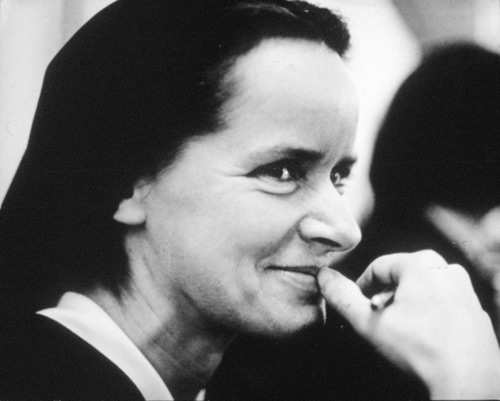
Sister Corita Kent


A catholic convent might not be the first place to consider when searching for a radical art education in the late 20th century - that is, unless you had Sister Corita Kent as an instructor. Aside from creating over 400 brilliantly colored serigraphs radical in their manipulation of text, graphic design elements, and activism, Corita Kent was an inspiring and influential educator to both teachers and students alike. In this beautiful documentary created by Araron Rose, we are given a glimpse into Kent’s unconventional instruction through first hand accounts made by her students and peers. Here we see how her radical teaching methods stimulate her students' creativity beyond the classroom by teaching them first and foremost “how to see, to really see,...to look, to look again - anew.” 
 
http://www.nowness.com/day/2010/6/5/685/breaking-a-habit-sister-corita

A clip from the documentary, Become a Microscope by Aaron Rose

As part of a project in 1967-1968, Kent authored “Ten Rules,” a list of “commandments” for both the student and teacher participating in a creative practice. These rules were later appropriated permanently by the Immaculate Heart Convent art department - at which she had been both an alumni and a sister - and have been adopted and popularized by artist and educator John Cage, who is directly quoted as the tenth rule. The rules are as follows:


RULE ONE: Find a place you trust, and then try trusting it for awhile.


RULE TWO: General duties of a student — pull everything out of your teacher; pull everything out of your fellow students.


RULE THREE: General duties of a teacher — pull everything out of your students.


RULE FOUR: Consider everything an experiment.


RULE FIVE: Be self-disciplined — this means finding someone wise or smart and choosing to follow them. To be disciplined is to follow in a good way. To be self-disciplined is to follow in a better way.


RULE SIX: Nothing is a mistake. There’s no win and no fail, there’s only make.


RULE SEVEN: The only rule is work. If you work it will lead to something. It’s the people who do all of the work all of the time who eventually catch on to things.


RULE EIGHT: Don’t try to create and analyze at the same time. They’re different processes.


RULE NINE: Be happy whenever you can manage it. Enjoy yourself. It’s lighter than you think.


RULE TEN: “We’re breaking all the rules. Even our own rules. And how do we do that? By leaving plenty of room for X quantities.” (John Cage)


HINTS: Always be around. Come or go to everything. Always go to classes. Read anything you can get your hands on. Look at movies carefully, often. Save everything — it might come in handy later.


Corita Kent was both an alumni and sister of LA’s Immaculate Heart Convent. She ran the art department from 1951 until 1968 when she moved to Boston. Corita Kent died of cancer Sept. 18, 1986. Find more information about Sister Corita Kent and her extraordinary life at https://www.corita.org/.

------

"Breaking A Habit: Sister Corita." NOWNESS. N.p., 5 June 2010. Web. 03 Dec. 2012. <http://www.nowness.com/day/2010/6/5/685/breaking-a-habit-sister-corita>.

Papova, Mario. "Brain Pickings." Brain Pickings RSS. N.p., 10 Aug. 12. Web. 03 Dec. 2012. <http://www.brainpickings.org/index.php/2012/08/10/10-rules-for-students-and-teachers-john-cage-corita-kent/>.

"Corita Kent." Corita Art Center--Art and Activism of Sister Mary Corita. N.p., n.d. Web. 03 Dec. 2012. <https://www.corita.org/>.

Tuesday, November 27, 2012

Artist Placement Group - (APG)

What a brilliant idea!

This is all preliminary research pertaining to the Artist Placement Group.
                                                                                                                                                      

E-Flux

"Artist Placement Group, APG." E-flux. N.p., n.d. Web. 27 Nov. 2012. <http://e-flux.com/timebank/event/artist-placement-group-apg>.

Note: This appears to be a press release for an exhibition, The Social Contract, 14 Feb - 23 Feb 2012

http://e-flux.com/timebank/event/artist-placement-group-apg

"Artist Placement Group (APG) was conceived by Barbara Steveni in London in 1965, and established a year later by Steveni and founding artists Barry Flanagan, David Hall, John Latham, Anna Ridley, and Jeffrey Shaw, among others. Between 1966 and the mid-1980s, APG negotiated approximately twenty placements on behalf of artists in industry and government. Unlike most residency schemes that have emerged in its wake, APG artists were not required to produce any determinable object as a result of her or his placement."

The goals of the APG were to:

-place an artist in an industry or government non-art related
-not to have the artist "work for" the industry, but it was more of an experiment to see what might be the benefit/outcome of a creative individual in an typically "non-art" situation

It was very difficult to evaluate the influence on either the artist or industry this program had.  

Artist Placement Group, Between 6, Städtische Kunsthalle Düsseldorf, 1971. Courtesy Barbara Stevini
                                                                                                                                                       

Frieze Magazine
Context is Half the Work
Peter Eleey 
 
Eleey, Peter. "Frieze Magazine | Archive | Context Is Half the Work." Frieze Magazine RSS. N.p., Nov. 2011. Web. 27 Nov. 2012. <http://www.frieze.com/issue/article/context_is_half_the_work/>. 

"In 1966, the Artist Placement Group was founded to integrate artists into businesses and corporations around Britain. Did the strategy bear fruit?"
In the same decade two similar groups developed:
  • Los Angeles County Museum of Art, "Art and Technology Program" under the direction of curator Maurice Tuchman
  • A collaboration between Bell Labs and Robert Rauschenberg, Experiments in Art and Technology (EATS)

"APG favoured the notion that artists could have a positive effect on industry through both their inherent creativity and their relative ignorance of its conventions." 

1968 - Industrial Negative Symposium, London

Artist Placements:

Garth Evans - British Steel Corporation
David Hall - British European Airways + Scottish Television
Stuart Brisley - Hillie Co. Ltd
Leonard Hessing - ICI Fibres
Lois Price - Milton Keynes Development Corporation
Ian MacDonald-Munro + Marie Yates - Centre for the Study of Human Learning at Brunel University
John Latham - National Coal Board + Proteus Bygging
Ian Breakwell + David Parsons - British Rail
Andrew Dipper - Esso Petroleum

APG recieved much criticism as an art practice. 

"Lathom's...'least-event,' an idea borrowed from scientist friends, which he saw as a kind of zero moment from which things flowed forward into the present and beyond."

"Instead of pulling the audience and environment into the art work, APG located the work out in the world, a tabula rasa on which society’s approval of artists (or lack thereof) would register."

In 1989, APG refocused its efforts in advocacy and policy than actual placement and renamed "Organization and Imagination" (O+I).

"Nevertheless, the Utopian vision of what she called ‘repositioning art in the decision-making processes of society’ remained and continues in force."

"The approach of APG makes evident artists’ obsession during the 1960s and ’70s to engage with the new ‘systems’ of social science, culture and industry, but it was among the first to model in its practice the shift towards a service-based economy that was occurring in society at large, as well as the rise of intellectual property as a product."

Other service-based practices referenced in this article:

"When artists work in open-endedly collaborative relationships – projects such as Marjetica Potrc’s infrastructure improvements in impoverished communities, Superflex’s guarana co-operative and soft drink company in Brazil, Thomas Hirschhorn’s Bataille Monument (2002) or France Morin’s The Quiet in the Land residencies"


Raven Row (Contemporary Art Space, London) 

The Individual and the Organisation: Artist Placement Group 1966-79

Curated by Antony Hudek and Alex Sainsbury, consultation by Barbara Steveni

"The Individual and the Organisation: Artist Placement Group 1966-79." Raven Row. Ed. Antony Hudek and Alex Sainsbury. N.p., n.d. Web. 27 Nov. 2012. <http://www.ravenrow.org/current/>.

"APG arranged that artists would work to an 'open brief', whereby their placements were not required to produce tangible results, but that the engagement itself could potentially benefit both host organisations as well as the artists in the long-term."

"Instead of commissioning art works, the host organizations were asked to pay the artist wages and in exchange, they would benefit from the artist's reports, ideas and insights."